We're Open Every Saturday

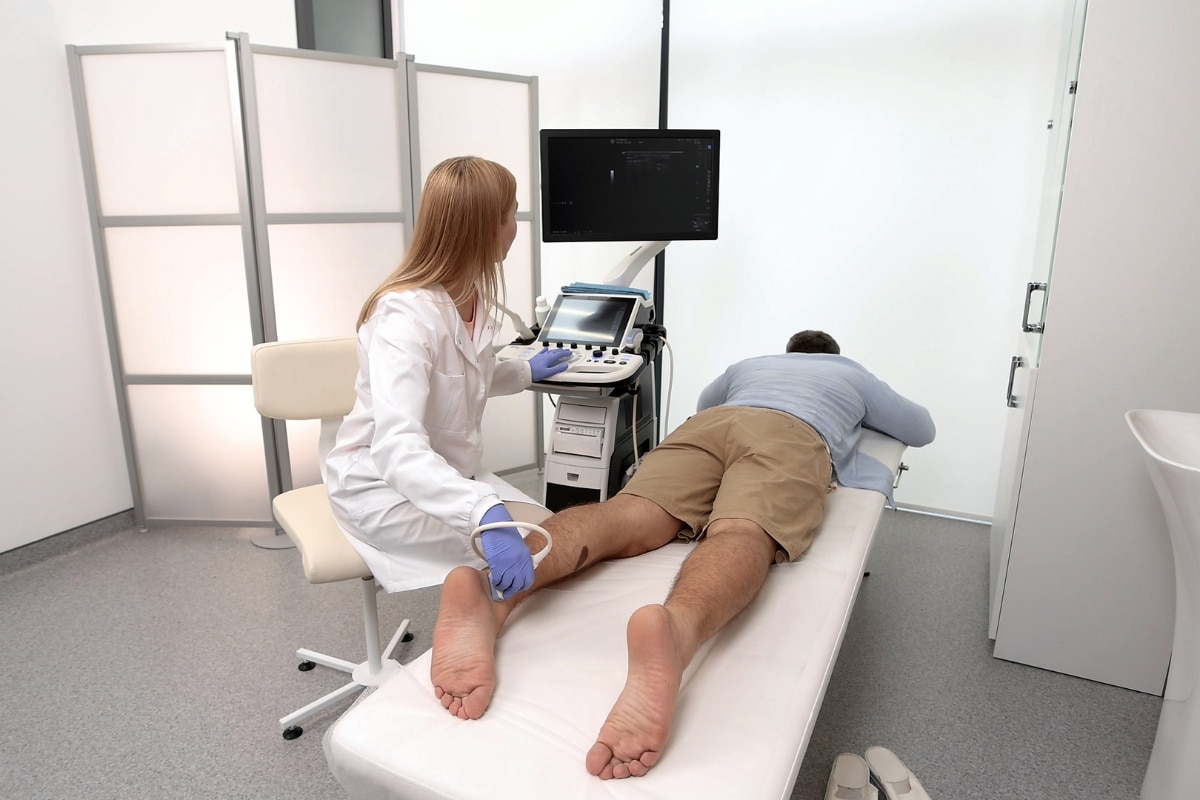
Hip pain that lingers for months or years can quietly shrink your life. You stop taking long walks. You hesitate before sitting down. You get up more carefully than you used to. Most people with chronic hip discomfort have tried the usual routes: rest, anti-inflammatory medication, and maybe physical therapy. Some find relief. Many don’t, at least not fully.
That’s where cold laser therapy enters the picture. It’s not a new concept – low-level laser therapy has been studied for decades, but its clinical application for chronic musculoskeletal pain, including the hip, has grown considerably as the evidence base has strengthened. For patients who haven’t found lasting relief through conventional means, it’s a treatment worth knowing about.
Why the Hip Is Vulnerable to Chronic Pain
The hip joint is a ball-and-socket joint that handles an enormous amount of load during everyday movement – walking, climbing stairs, shifting your weight from one leg to the other. It’s also surrounded by a complex network of muscles, tendons, and bursae that can each become a source of pain when irritated or inflamed.
Common contributors to chronic hip discomfort include hip osteoarthritis, trochanteric bursitis (inflammation of the fluid-filled sac on the outer hip), labral tears, hip flexor strain, and referred pain from the lumbar spine or sacroiliac joint. Many of these conditions involve persistent inflammation and compromised cellular repair, which is precisely what cold laser therapy is designed to address.
Getting the right assessment is the first step toward healing. Dr. Ash at The Chiro Guy™ thoroughly evaluates each patient’s hip condition before recommending a treatment plan, and, as a cold laser therapy specialist in Beverly Hills, he applies this technology to the tissues and drives your discomfort.
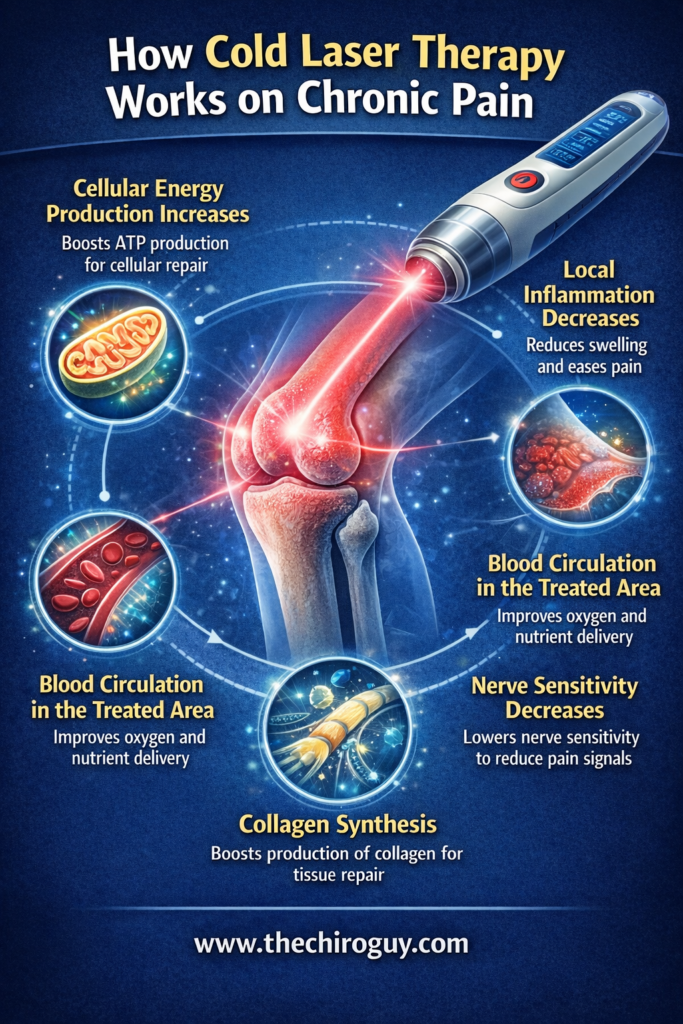
How Cold Laser Therapy Works on Chronic Pain
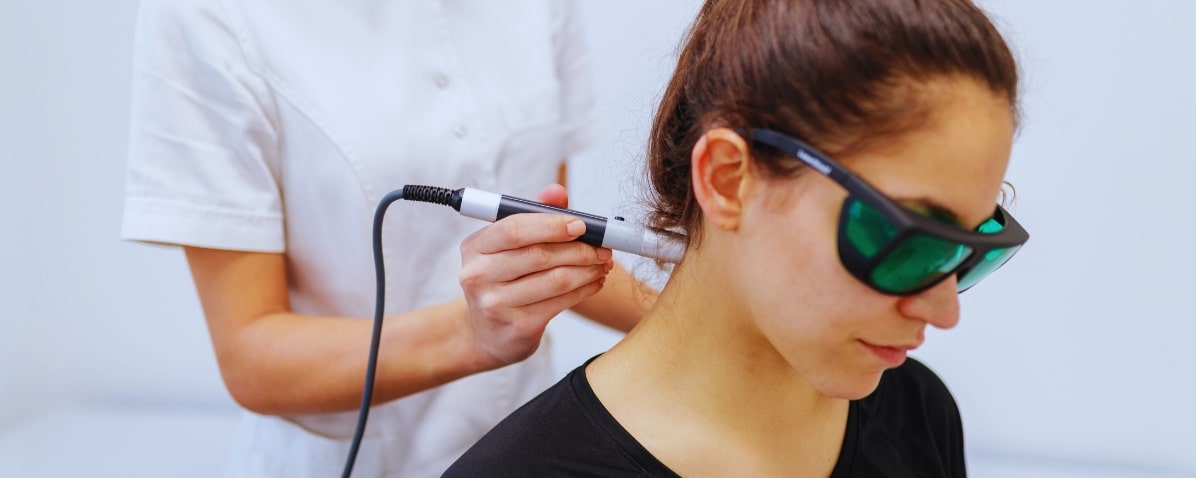
Cold laser therapy, also called low-level laser therapy (LLLT) or photobiomodulation, uses specific wavelengths of light to penetrate the skin and reach the underlying soft tissue. Unlike surgical lasers, it produces no heat and causes no tissue damage. The mechanism is photochemical rather than thermal: light energy is absorbed by mitochondrial complexes within cells, triggering a cascade of biological responses.
What’s happening inside the tissue
- Cellular energy production (ATP synthesis) increases, giving damaged cells the resources to repair
- Local inflammation decreases as pro-inflammatory cytokine activity is modulated
- Blood circulation in the treated area improves, supporting nutrient delivery and waste removal
- Nerve sensitivity in the area can be reduced, which directly affects pain perception
- Collagen synthesis is stimulated, supporting tissue repair in tendons, ligaments, and cartilage
For chronic hip conditions, this matters because the underlying issue isn’t just pain – it’s the stalled or incomplete healing process that keeps the pain coming back. Cold laser therapy works at the cellular level to restart and support that process.
Who responds well to cold laser therapy for hip pain
- Patients with chronic bursitis or tendinitis who haven’t fully resolved with other treatments
- Individuals with mild to moderate hip osteoarthritis looking to manage symptoms conservatively
- Athletes or active patients dealing with hip flexor or labral irritation
- People who have had hip surgery and are supporting tissue recovery during rehabilitation
- Those who want to reduce reliance on pain medication for ongoing hip discomfort
What to Expect During Treatment at The Chiro Guy™
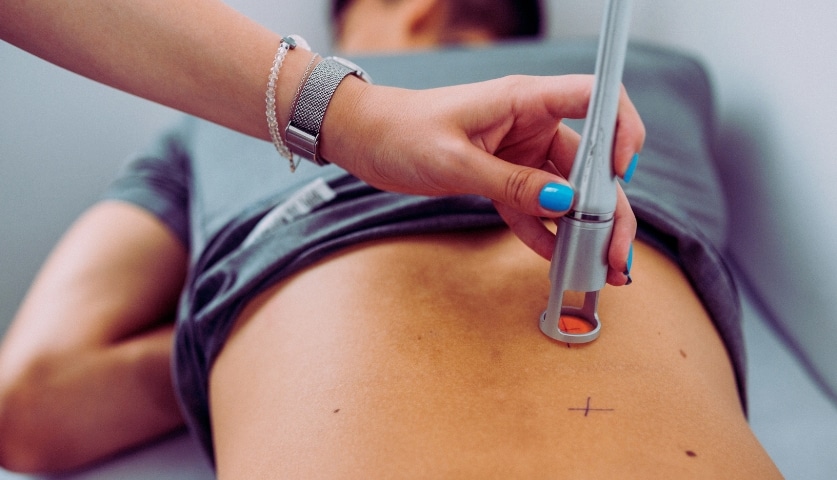
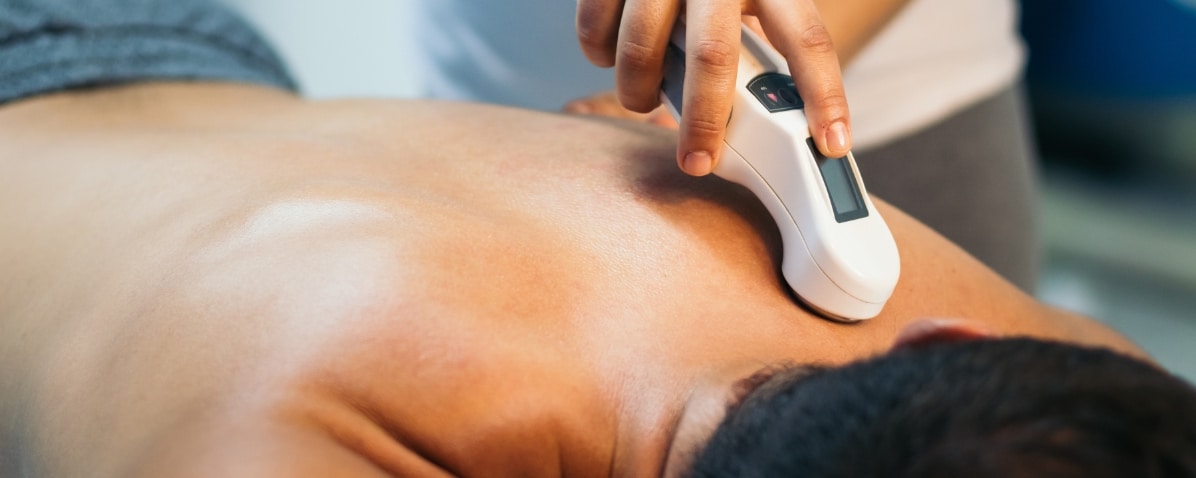
A cold laser therapy session is straightforward. You’ll lie comfortably while Dr. Ash applies the laser device directly over the affected hip area. The sensation is described as a mild warmth or nothing at all – it’s painless. Sessions last between 10 and 20 minutes, depending on the size of the area being treated and the severity of the condition.
Treatment frequency varies by case. Some patients see meaningful improvement within three to five sessions. Others with more complex or long-standing conditions may benefit from a longer course spread over several weeks. Dr. Ash will reassess your progress throughout and adjust accordingly rather than locking you into a predetermined number of visits.
Cold Laser Therapy in Beverly Hills: The Extensive Treatment Picture
Cold laser therapy fits naturally into a conservative, integrative care model. At The Chiro Guy™, Dr. Ash combines it with chiropractic care, soft tissue therapy, and corrective exercises to address the full scope of what’s contributing to your hip pain. Whether you’ve had this discomfort for six months or six years, working with a cold laser therapy specialist in Beverly Hills gives you access to a treatment approach that goes deeper than symptom management.
Book a consultation with Dr. Ash at The Chiro Guy™ in Beverly Hills.
People Also Ask
How many cold laser therapy sessions are needed for hip pain?
It varies depending on the condition and how long it’s been present. Acute or recent injuries may respond in as few as four to six sessions. Chronic conditions, those that have been present for months or years, often require eight to twelve sessions or more. Your provider will evaluate your response throughout treatment and adjust the plan based on how your tissue is healing, rather than sticking to a fixed number.
Is cold laser therapy FDA-cleared?
Yes. The FDA has cleared low-level laser therapy devices for use in the United States to treat pain and inflammation in musculoskeletal conditions. Clearance is not the same as FDA approval, but it confirms that the devices have been reviewed for safety and meet the regulatory standards required for clinical use. Always confirm that your provider is using an FDA-cleared device.
Can cold laser therapy be used alongside other hip pain treatments?
Yes, and it’s often most effective that way. Cold laser therapy is typically used as part of a broader treatment plan that may include chiropractic adjustments, physical therapy exercises, soft tissue mobilization, and lifestyle modifications. It does not interfere with most other conservative treatments, and some patients use it alongside medically managed conditions, provided their physician is informed.
Does cold laser therapy help with hip pain from sciatica or lumbar issues?
Hip pain that originates from the lumbar spine or sacroiliac joint, sometimes called referred pain, can also respond to cold laser therapy when treatment is applied along the nerve pathway and to the lumbar region, not just the hip itself. A thorough evaluation is essential to determine the source of the pain before any treatment begins, as the source dictates where the laser should be directed.